struct Point
{
  double x, y;
};

struct Node
{
  Point data;
  Node* next;
};

Node *L;
double a, *ptr;
Point p;
| expression | type |
*L | |
L = &p | |
&(L->data) | |
L.next | |
p->x | |
*ptr = L->data.x | |
*(L->next) | |
&a | |
L->next->data.y | |
new Node |
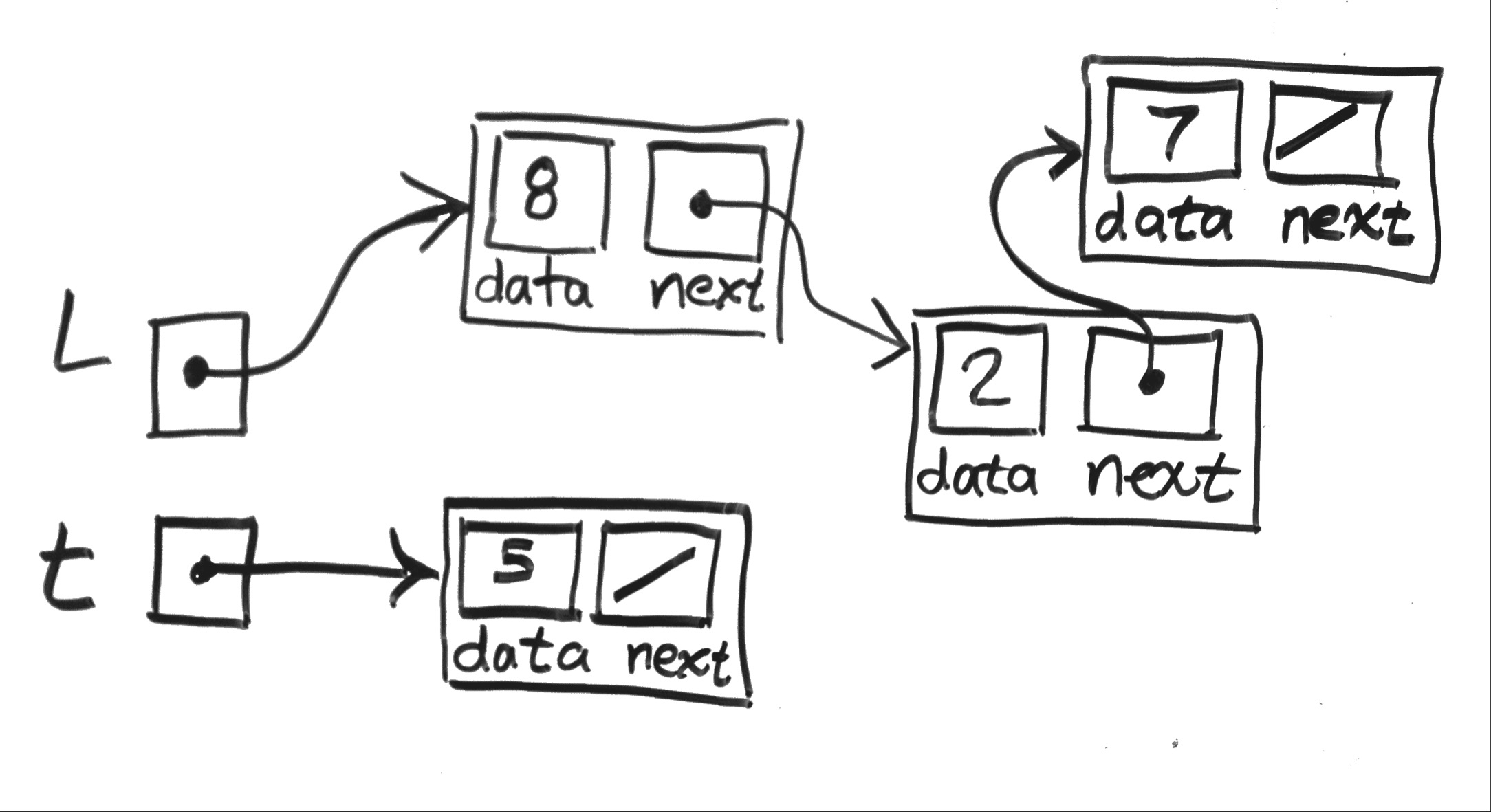 [15pts]
Given the struct definition
[15pts]
Given the struct definition
struct Node
{
  int data;
  Node* next;
};
and variables L and t, both of type
Node*, with the values depicted in the figure to
the right, write statement(s) that perform the following.
Note: each problem is independent, meaning that changes in one
part are not carried forward into the next part.
- Change the 8 to a 13:
- Change the 2 to a 6:
- Add the node
tpoints to to the front of the listL— i.e. after these statements,Lshould point to the list 5,8,2,7.
~/$ ./prog
Enter a list of positive numbers, terminated by zero:
7 2 9 33 14 10 9 18 7 0
The last number was 7
The next to last number was 18
Turn In a printout of all three source code files (codeprint allows you to list several files to print all together, like
codeprint foo.h foo.cpp bar.cpp),
and a screenshot of a terminal window showing the program
being compiled and running on the above example.