
NE 203: Ethics & Moral Reasoning for Naval Leaders
Cheating and Falsification
In week 2 we studied how socialization processes can help lead to individuals and communities becoming complicit in everyday violations--both great and small--of what's right. Often, participants try to justify this "business as usual" approach as a means to accommodate for bureaucratic insufficiencies, unfair practices, and other real or imagined violations of what's right.
When these systematic violations become commonplace, many participants believe, rightly or wrongly, that they have to collude with the established practices in order to fit in, not betray the confidences of their friends or colleagues, "keep the code," or avoid personal repercussions or consequences.
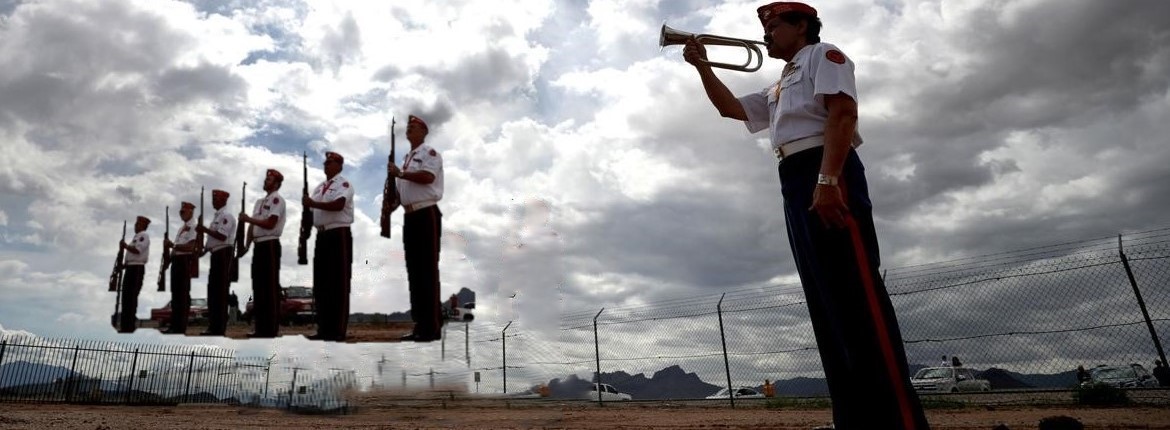
These are not academic discussions. As we will see, they can have catastrophic and irreversible consequences that were never intended. The masthead image above, for instance, features Marine Corps League Tucson Detachment #007 and bugler Jerry Coyle as they perform taps to wrap up the 20th anniversary commemoration ceremony at Marana Regional Airport, Marana, Arizona, for the 19 U.S. Marines killed in the 2000 Osprey crash mentioned in the reading below.
WATCH THIS
USNA Cheating Scandal
Think about the following prior to class:
- How do you assess the seeming violation of competing codes in the Naval Academy cheating scandal?
- What were the pressures the individual Midshipmen faced?
- Each of the former Midshipmen in the video insist that they made their own choices and have only themselves to blame.
- Do you think this is correct?
- Are there contributing factors that you think made their ability to choose not to cheat more difficult?
- How can individuals work to change corrupt or corrupting systems?
- How do you do so within the chain of command?
- How can you, as a future officer, shape your command environment so that your subordinates believe they can make good choices and alert you to systemic problems?
