


Facilities and Lab Spaces
Aerospace Engineering Laboratory Spaces


Rotor Lab
A full-size helicopter rotor test cell is available for students who focus on rotary wing aircraft. USNA is one of the few undergraduate institutions to let students focus on rotary wing aircraft prior to graduate education.
Water Table
Our water table helps students visual the physics of air flow with water and shockwaves off different geometric cross sections of air foils or general shapes. Water behaves in a similar manner to complex supersonic air flows and is often used to study the complex interactions of shock waves in jet engine nozzles and exhausts, around blunt atmospheric re-entry bodies, and over high speed air foils. The water table is much cheaper to operate then the supersonic wind tunnel and is used in student's introductory courses, propulsion courses, and specific astrodynamics courses.

Water Table with Airfoil Cross Section (2021)

Water Table with Gemini Capsule Cross Section (2021)

Water Table with Space Shuttle Cross Section (2021)
Structures Lab
During 3/C and 2/C year, students use the structures lab to apply what they have been learning in their statics and structures classes. The lab technicians often help the professors run the experiments and let students assist them during the demonstrations.

Class Watching the Lab Technician do a Demonstration

Large-Scale Set-Up for Strain and Stress Testing
Space Systems Engineering Lab (SSEL)

SSEL is a 7000 square-foot facility in Rickover Hall, which houses the Satellite Operations Center, rooftop antenna farm, 12-meter parabolic antenna on Hospital Point, Satellite Fabrication and Qualification Facilities, academic lab space, and Capstone Design Spaces for the Astronautical Track that include the Satellite Team and the Rocket Team.
Satellite Operations Center
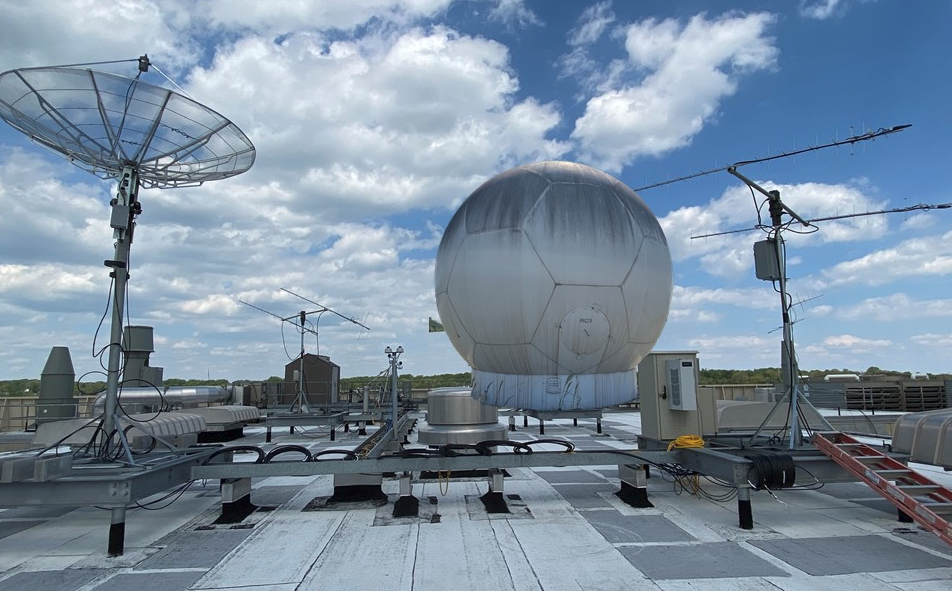
The antenna farm on the Rickover roof supports both the educational SOC and the operational SOC with direct coaxial, ethernet and fiber optic connections from the roof to the SOC. The educational antennas and operational antennas are separately assigned and utilized by the corresponding zones in the SOC. The rooftop antenna farm also supports the USNA Ham Radio Club and i5 Club.
12-meter parabolic antenna on Hospital Point
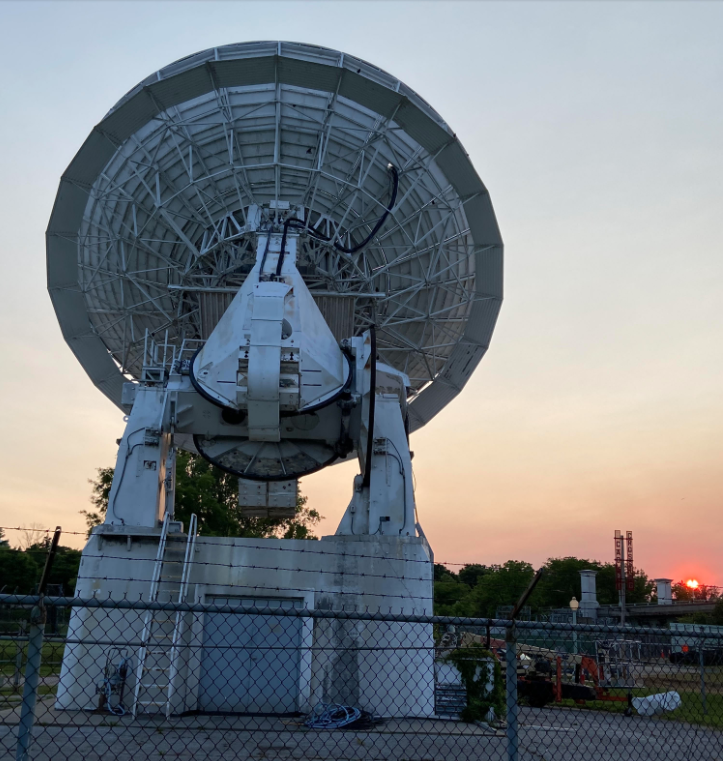
The 12-meter parabolic antenna on Hospital Point is connected via fiber-optic to the Satellite Operations Center in Rickover Hall, and has been an integral part of USNA satellite operations since the 1990s. With high-gain capabilities in the VHF through Ka-bands, the 12-meter antenna is used to support educational SATCOMMs for midshipmen CubeSats, as well as operational communications for internal and external USNA partners.
Satellite Fabrication: Clean Room
The SSEL Clean Room is a specialized room used by the Satellite Team Capstone when fabricating flight-ready hardware for launch.
Satellite Fabrication: Tool Room
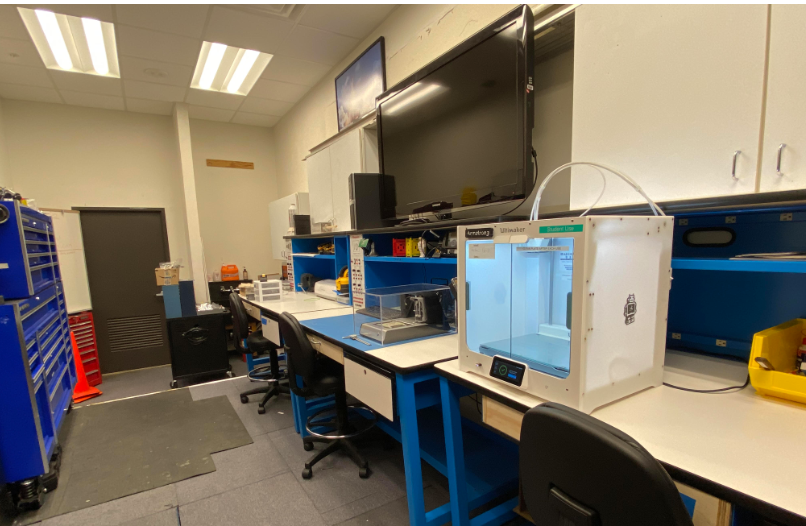
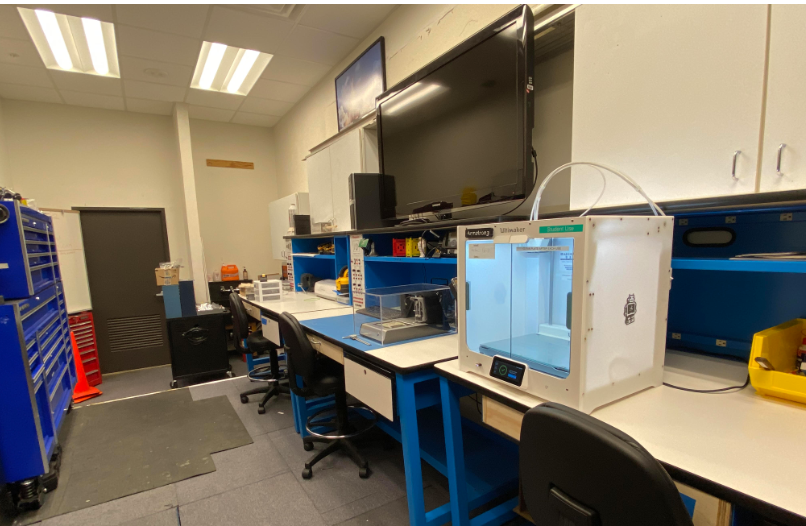
The SSEL Tool Room houses specialized fabrication equipment, including 3D printing, printed circuit board fabrication, and solar panel cutting. The Tool Room also contains a full array of hand tools, power tools and hardware to support student projects and the lab.
Satellite Qualification
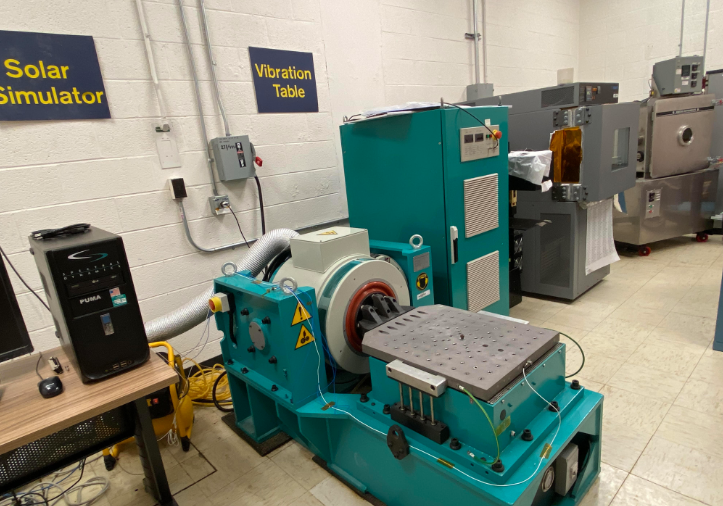
The Satellite Qualification Center on the lab deck of Rickover Hall houses the vibration table, solar simulator, thermal chamber and thermal vacuum chamber, which are used to qualify midshipmen CubeSats for launch. The SSEL also provides consultation and testing services to local high-school and college students who are building CubeSats as part of their extracurricular programs.
Satellite Team Capstone Design Space

The Satellite Team Capstone Team designs, fabricates and launches a CubeSat every year. The space dedicated to this team includes prototyping stations, electronics benches, dedicated computer hardware and software, and specialized equipment like speedmixers and gyroscopes, as well as access to flight-ready electronic components and storage containers.
Rocket Team Satellite Design Space
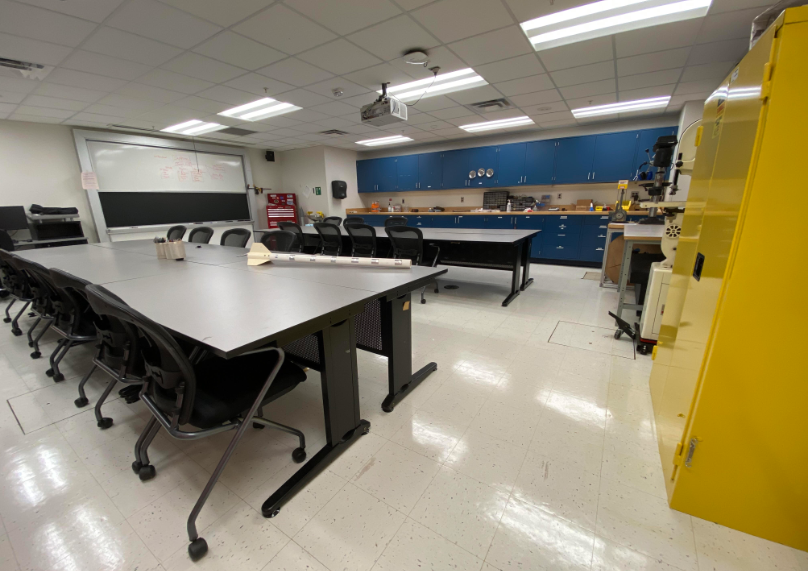
The Rocket Team Capstone Team designs and fabricates a rocket for the NASA Student Launch Initiative. The space dedicated to this team includes specialized software, design and testing spaces, magazine storage, as well as specialized materials and safety equipment
SSEL Academic Lab
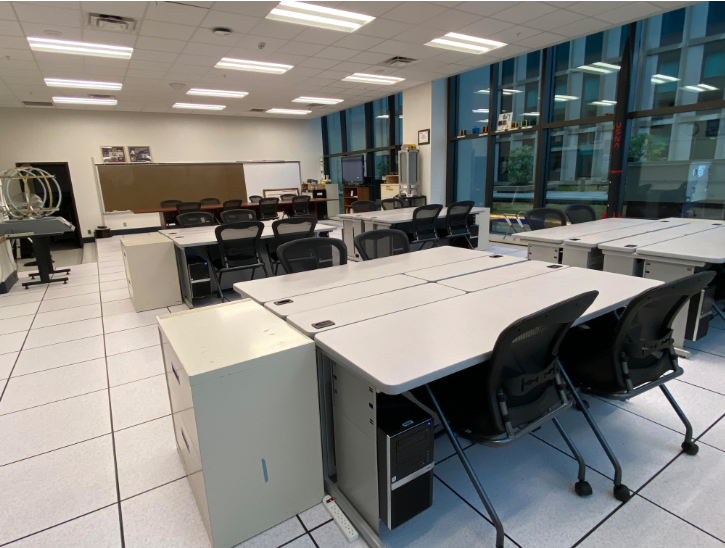
The academic lab section of the SSEL hosts midshipmen lab courses throughout the academic year, and supports supplemental student program through the Naval Academy Summer Seminar, the Astronaut Convocation, and mentorship program. In addition to standard lab equipment, it contains specialized lab equipment such as Helmholz coils, software-defined radios, and a solar simulator.
USNA Ground Station
The USNA Ground Station, which is currently being updated, communicates with the small satellites the team has put into space and other orbiting spacecraft to include the International Space Station feed.
